
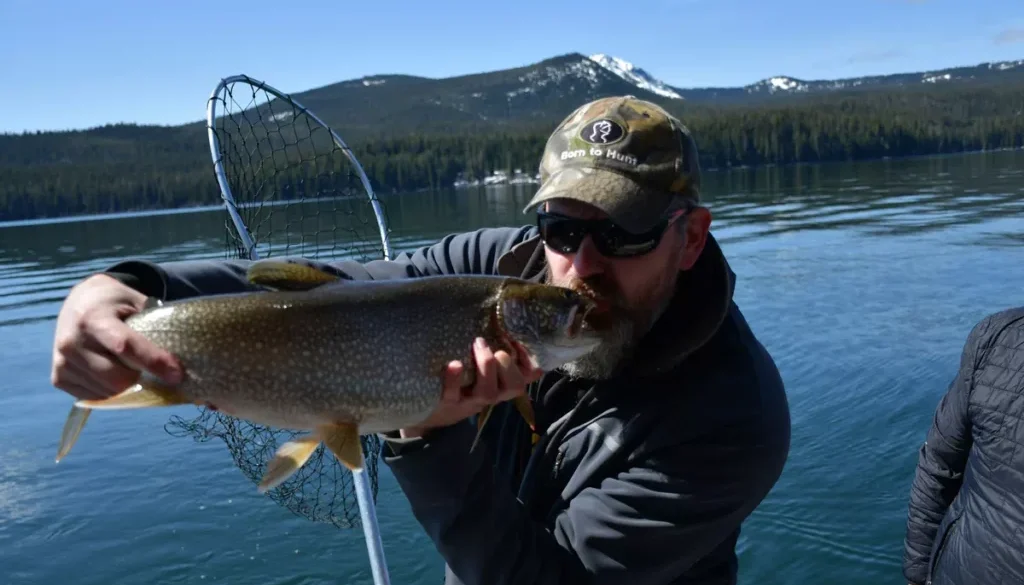
Mastering the Deep: A Comprehensive Guide to Lake Trout Fishing
The lake trout (Salvelinus namaycush), widely known as the mackinaw, stands as an apex predator of North America’s cold-water ecosystems. Unlike true trout, the mackinaw is biologically a member of the char family. It has earned a legendary https://bigfishmccall.com/ reputation among anglers for its immense weight, deep-dwelling habits, and stubborn resistance on the line. For those seeking a true freshwater heavyweight, mastering the tactics required to find and catch these deep-water giants is the ultimate angling challenge.
 O ~ ~ ~ [Water Surface]
 / \
 / \
 / \
 / \ <-- Deep Water Column (Thermocline)
 / \
 / \
| |
======================================== [Lake Bottom / Submerged Humps]
 ><(((*> ><(((*> (Mackinaw Colony)
Anatomy and Identification
Identifying a mackinaw requires looking closely at its distinct markings and structural features:
- Forked Tail: They possess a deeply forked caudal fin, a trait that easily separates them from brook or bull trout.
- Body Pattern: Their skin features a dark gray or greenish backdrop covered entirely in light cream or yellow spots.
- Fin Edges: The lower fins display a sharp, contrasting white leading edge.
- Lack of Halos: Unlike brown trout, their spots completely lack red or blue halos.
Habitat and Seasonal Movements
Mackinaw are strictly bound by water temperature and dissolved oxygen levels. They prefer water temperatures between 40°F and 52°F (4°C to 11°C). This preference dictates their deep-water habits:
- Spring: As ice melts, surface waters remain frigid. Lake trout roam shallow bays and shorelines to feed aggressively on baitfish.
- Summer: As surface temperatures rise, lake trout retreat deep below the thermocline. They often settle into depths ranging from 60 to over 150 feet, hugging underwater structures like humps, drop-offs, and ancient river channels.
- Autumn: When water temperatures drop, they return to shallow, rocky shoals to spawn, making them highly accessible to shore anglers once again.
Essential Gear and Tactics
Because mackinaw spend the majority of the year at extreme depths, specialized gear is required to reach them effectively.
Downrigger Trolling
Trolling is the most reliable method for covering vast expanses of deep water. Anglers utilize downriggers—heavy lead balls attached to steel cables—to lower their fishing lines to precise depths. Highly productive lures include large silver spoons, deep-diving crankbaits, and flashing dodgers paired with live or dead baitfish.
Vertical Jigging
When fish are tightly concentrated around deep structural humps, vertical jigging provides unmatched precision. Using a high-resolution fish finder, anglers position their boats directly above the school. Heavy lead-head jigs weighing 1 to 2 ounces, tipped with a soft plastic tube or a piece of sucker meat, are dropped straight to the bottom and snapped upward to trigger aggressive reaction strikes.
Conservation and Catch Care
Because lake trout grow exceptionally slowly in cold water, a 30-pound mackinaw can easily be over 30 years old. Due to the extreme depths from which they are caught, pulling a fish up too rapidly can cause barotrauma. Anglers practicing catch-and-release should reel slowly, handle the fish with wet hands, and utilize a descending device to safely return the fish to its deep-water habitat, ensuring the preservation of these magnificent giants for generations to come.
![luxurious-train-dining-stockcake[1]](https://index-ps.net/wp-content/uploads/2026/06/luxurious-train-dining-stockcake1-1024x574-394x330.jpg)